
Feeling Tired on a GLP-1? Here's How to Get Your Energy Back
Your guide to understanding fatigue while taking a GLP-1 and how nutrition and daily habits can help restore steady energy.
Clinically reviewed by: Priscilla Rodriguez, MHA, RN
Last updated: January 2026
Feeling more tired after starting GLP-1 therapy is more common than many people expect. Even when weight loss is progressing, low energy, lightheadedness, or fatigue can make daily routines feel harder than usual.
In most cases, this doesn’t mean something is wrong. GLP-1 changes how your body processes food, your appetite, and blood sugar, which can temporarily affect energy levels. With the right nutrition and lifestyle support, many people are able to feel more stable, clear-headed, and energized over time.
How GLP-1s Can Affect Energy Levels
GLP-1 medications work by mimicking a natural hormone that helps regulate blood sugar and appetite. These effects support metabolic health, but they also change how and when your body receives energy from food. These changes are often subtle but can add up, especially in the early stages of treatment.
Why Fatigue Can Show Up
Several factors can contribute to feeling tired on GLP-1, including:
- Eating less overall, sometimes without realizing it
- Slower digestion, which can delay energy availability
- Shifts in blood sugar regulation
- Reduced intake of protein, fiber, or fluids
Supporting Energy Through Daily Habits
Low energy on GLP-1 doesn’t usually mean you need to do more. In most cases, it’s a sign your body is adjusting to changes in appetite, digestion, and blood sugar. Supporting energy is about creating steady, predictable habits that help your system stay regulated throughout the day.
Gentle Movement (Not Exhaustion)
Movement can help restore energy when it’s kept simple and consistent. Walking, stretching, or low-impact strength work supports circulation and blood sugar balance without placing extra stress on the body. Especially early on, consistency matters more than intensity.
Eating for Steady Energy
What you eat — and when you eat — play a major role in how stable your energy feels. Most people do best with meals that are balanced, smaller in size, and spaced evenly across the day. Avoiding long gaps between meals can help prevent energy dips that come from under-fueling.
Meals that support energy typically include:
- Protein to support muscle and metabolism
- Fiber to slow digestion and help stabilize blood sugar
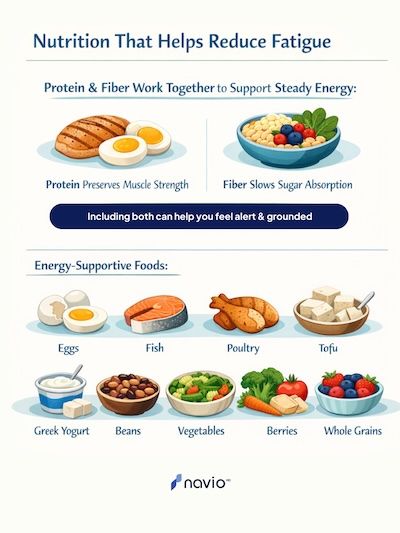
Nutrition That Helps Reduce Fatigue
Protein and fiber work together to support steady energy.
- Protein helps preserve muscle during weight changes, while
- Fiber slows sugar absorption and reduces crashes.
Including both at meals can help you feel more alert and grounded.
Common energy-supportive foods include:
- eggs
- fish
- poultry
- tofu
- Greek yogurt
- beans
- vegetables
- Berries
- whole grains.
Hydration also matters.
GLP-1s can reduce thirst cues, making it easier to fall behind on fluids. Even mild dehydration may contribute to fatigue or lightheadedness. Water remains essential, and electrolytes may be helpful if intake is low or activity levels are higher.
Managing Nausea and Low Appetite
Side effects like nausea or low appetite can make it harder to eat enough to support energy. This doesn’t mean you’re doing anything wrong, it often reflects your body adjusting. When full meals feel difficult, nutrient-dense options can help meet your body’s needs without overwhelming digestion
Helpful strategies may include:
- Eating smaller meals more frequently
- Choosing softer or blended foods, like soups or smoothies
- Avoiding very rich or greasy foods early on
- Using ginger tea or ginger-based foods if tolerated
Hormones, Stress, and Energy
Energy isn’t just about food. Blood sugar regulation, stress hormones, and insulin sensitivity all play a role in how energized you feel.
Chronic stress can raise cortisol, which may worsen fatigue. Supporting sleep, managing stress, and maintaining regular meals all help your body use energy more efficiently.
Personalized Support Makes a Difference
Energy needs vary from person to person. What works for one individual on GLP-1 may not work the same way for another.
At NavioMD, care is personalized and adaptive. Through secure virtual visits, clinicians look at:
- Nutrition patterns
- Energy fluctuations
- Appetite changes
- Lifestyle and daily routines
This whole-person approach helps identify what your body needs to feel more supported over time.
Bringing It All Together
Feeling tired on GLP-1 is common, especially early on. In most cases, fatigue reflects changes in appetite, digestion, hydration, and blood sugar, not a problem with the medication itself.
With balanced nutrition, gentle movement, and personalized guidance, many people are able to restore steady energy and feel more like themselves again.
If you’re experiencing ongoing fatigue and want support tailored to your body and goals, we’re here to help.
Book your telehealth consultation with NavioMD today and get care designed around you.
Keywords: GLP-1 energy, low energy on GLP-1, foods for energy on GLP-1, GLP-1 fatigue, tired on GLP-1, increase energy on GLP-1, GLP-1 diet energy, what to eat on GLP-1 for energy, best foods for energy, protein for energy, fiber and energy, balanced meals on GLP-1, GLP-1 fatigue solutions, nausea and low energy GLP-1, dizziness on GLP-1, low appetite and fatigue, blood sugar and energy, metabolism and energy, insulin sensitivity, cortisol and fatigue, hormone balance and energy, GLP-1 nutrition support, personalized GLP-1 care, telehealth GLP-1 support, sustainable weight loss GLP-1
Citation references:
- https://naviomd.com/blog/what-should-i-eat-while-taking-a-glp-1-a-practical-guide-to-balanced-meals-and-appetite-support
- https://www.healthline.com/health/nutrition/glp-1-diet
- https://www.uchealth.org/today/nutrition-vital-when-taking-glp-1-weight-loss-drugs/
- https://jamanetwork.com/journals/jamainternalmedicine/fullarticle/2836527
Download our high-protein, high-fiber cheat sheet
A guide to grocery shopping with high-protein, high-fiber, nutrient-dense foods.

Care designedfor real life.



Copyright © 2025 NavioMD
*Based on internal patient survey. Results vary. | Not a substitute for professional medical advice. Consult your healthcare provider before starting any treatment.